The first action of the new strategy was the evolution of the previous Resource Efficiency Action Plan (REAP), which established zero waste to landfill and resource efficient processes for the sector, into a full Circular Economy Action Plan (CEAP). This builds upon the commitment in the UK Concrete Industry Sustainable Construction Strategy Framework by setting out shared objectives, actions and metrics for the sector, aligned with the direction of travel emerging through UK circular economy and industrial policy.
The the UK Concrete Circular Economy Task Group, collaborating with sustainability consultants Net Positive Solutions, Green Thinking and The University of Leeds conducted extensive stakeholder engagement to draft an initial set of objectives, actions, metrics,targets designed to drive the sector towards more circular practices. These will form an important part of the dynamic and evolving initiative, with ongoing industry consultation to ensure the plan's targets are ambitious yet practical.
Objectives
The CEAP is structured around the lifecycle stages of concrete and concrete products: manufacturing, transport and logistics, design, construction and demolition and reuse.
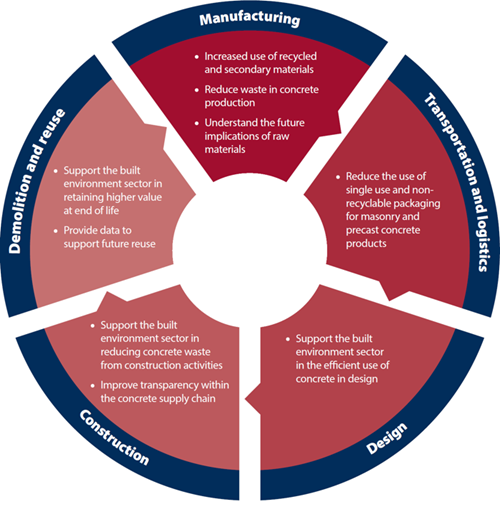
To enable the sector to deliver the actions identified in the CEAP, a supportive policy environment is critical to provide scale and pace by removing barriers and creating a level playing field for circularity. Collaboration across the built environment supply chain, including designers, contractors, clients, regulators and other stakeholders will be essential to achieving these objectives.
The CEAP is a living framework and will evolve through the development of more detailed targets and actions as policy changes and industry continues to innovate.
To download a copy of the Circular Economy Action Plan, click here.